














Create Engraved Electrical Panel Labels and ID Plates
Power up your designs with labels that are fresh and filled with critical information.
Control panel engraving technology lets you produce appealing, accurate panels on-the-spot – right on your assembly line.
When a label is missing or needs to be changed in your facilities maintenance department, quickly engrave a replacement in-house and get the panel back in service without headaches or long delays.
Engraving lets you produce perfectly-fitting ID plates for Schneider/Square D and Eaton/Cutler-Hammer electric boxes, as well as for Siemens, ABB/GE and Leviton boxes.
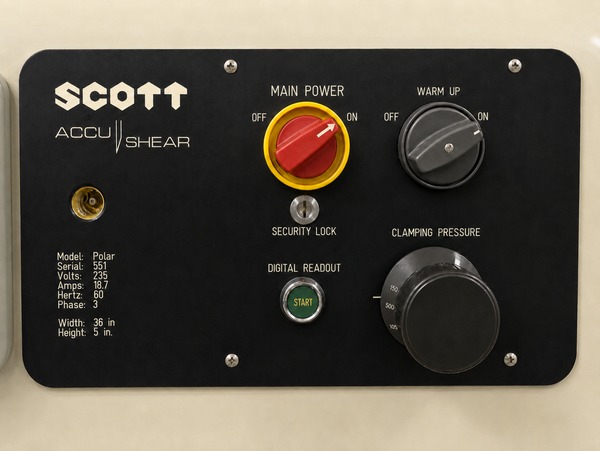
Control Panels Educate Your Operator
Inform your operator. Ensure they understand how to run the machine, by accurately explaining each control with text that won’t smear or degrade over years of rough use.
Add your logo, serial number, model and other specifications for even more clarity.
A clean, attractive control panel tells the operator that the machine was built with their productivity and safety in mind.
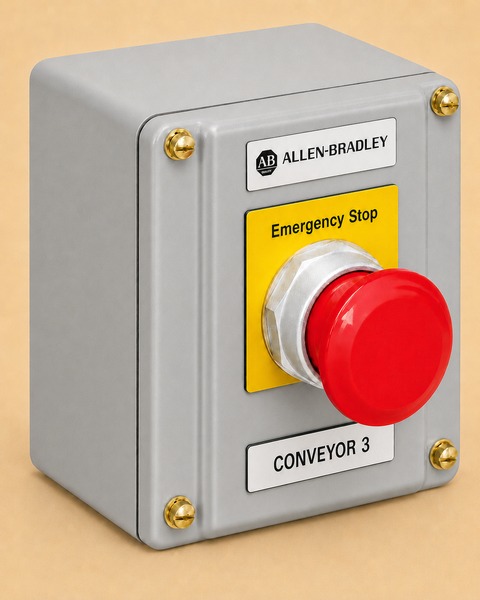
ID Plates that Convey the Entire Message
This Allen-Bradley emergency-stop box is marked so the operator does not have to interpret the control or trace the installation. The Emergency Stop plate identifies the function, while the CONVEYOR 3 tag ties the station to the equipment it serves.
With Scott engraving equipment, your designated team member can make that kind of permanent identification in-house as the need arises.
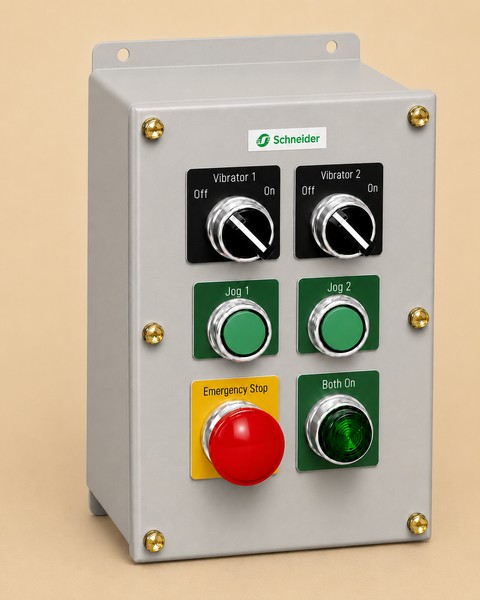
Clearly worded ID plates -- No Guesswork
This Schneider control box shows the value of labeling each control at the point where the decision is made. The operator sees which vibrator is selected, which jog button applies and whether both units are on.
The result is a cleaner, less cluttered control station that minimizes guessing, especially after equipment changes or service work.
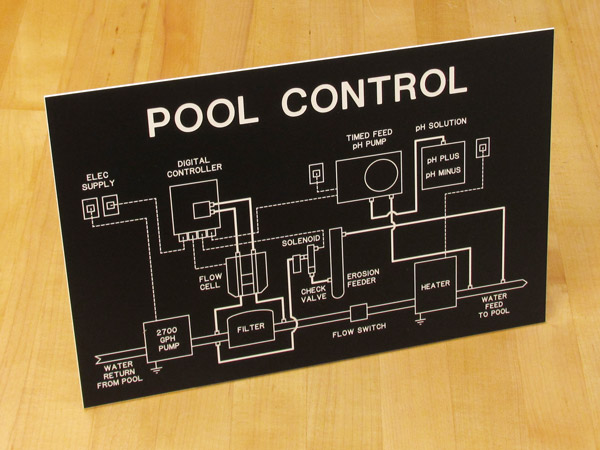
Explain Everthing with an engraved diagram
When the job calls for more than a few words around a switch, provide details with an engraved diagram that shows not just wiring, but motors, valves and pipes.
Then complete the job with engraved valve tags, equipment ID plates and instruction panels -- mounted on each item -- to give your staff all the information they need, right on the spot.
Design diagrams easily with our software, then engrave on panels up to 11" wide x 16" tall. Double-sided tape lets you mount the panel exactly where it belongs.
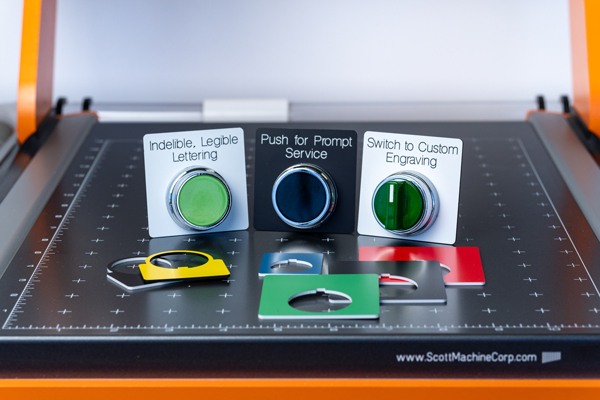
Electric Switch ID Plates for Greasy Gloves!
Instead of relying on tape or decals that can lift at the edges, these durable engraved plates fit securely around switches and pushbuttons and hold up in the kinds of environments where gloves, repeated use and daily maintenance are part of the work.
From a single word like “START”, to a serial number or a more detailed control legend, our industrial-strength plastic plates are made to fit the job and the equipment.
We manufacture standard blank or lettered switch plates in a wide range of colors and sizes, along with custom shapes, here in our upstate NY factory -- since 1962!
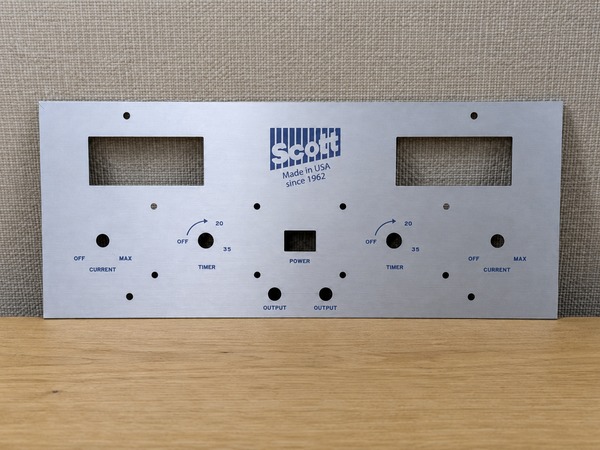
Now for the "Hole" Story
Engrave round and square holes as easily as you engrave the lettering.
Now you can mount switches and lights directly through the finished panel, or adhere the panel to an electrical cabinet.
Pop-up this video to watch Engraving Holes Through a Panel.
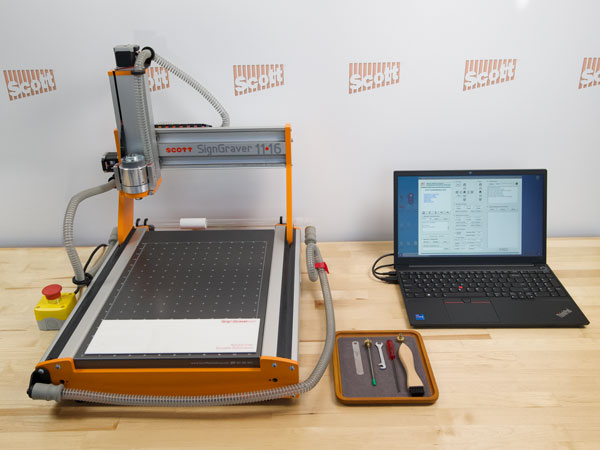
A Panel Engraver System on Your Bench
This machine’s functional design promotes a neat and clean workspace, with a handy vacuum that fits naturally into a knee-hole beneath the bench, where it’s attached via clear flex tubes. No ifs, ands, bolts or clutter.
And the software is equally functional - we called upon more than 50 years of engraving experience to create software that's designed by our engraver operators for your engraver operators.
Visit our page highlighting detailed Engraver Specs & Pricing.
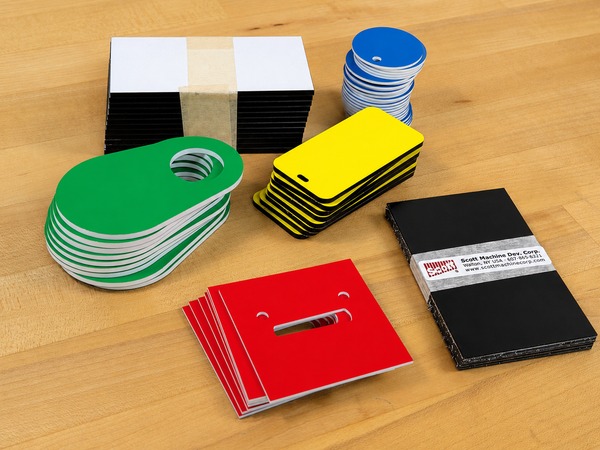
Lamacoids in all the OSHA colors
Your benchtop panel shop really comes together when you add Scott lamacoid plastic — the engraving stock we manufacture ourselves, here in America. We can supply sheets, slotted blanks and custom shapes cut to your specs.
That's the complete story for a complete facility labeling system: engraver, software, engraving plastics...and friendly one-to-one Zoom training that you purchase with the machine.
Helpful Tips When Labeling Electrical Panels
Keep it clear: Use labels that tell workers exactly what each circuit serves.
Be specific: “Kitchen counter receptacles” is more useful than “outlets.”
Make it readable: A good panel label should be easy to read - use a simple font at a suitable size.
Update changes: When a circuit is changed, update the label before the job is forgotten.
Mark spares: Unused breaker positions should be identified so that no one has to guess later.
See NEC® 408.4(A) for circuit directory and circuit identification details.


